Uttarakhand is a northern state of India. Uttarakhand is the 26th state of India and the 10th state in the Himalayan region. Uttarakhand is also known as Devbhoomi because of its numerous temples dedicated to Hindu deities.
Introduction to Uttarakhand
The state of Uttarakhand is primarily divided into two regions:
1. Kumaon and
2. Garhwal
Before the Indian Parliament divided Jammu and Kashmir into two union territories, Jammu and Kashmir and Ladakh, effective October 31, 2019, Uttarakhand was the 27th state of India and the 11th state in the Himalayan region.
Formation of Uttarakhand
The state of Uttarakhand was formed on November 9, 2000, when it was carved out of Uttar Pradesh. Uttarakhand was originally known as Uttaranchal.
It was renamed Uttarakhand on January 1, 2007.
Location of Uttarakhand
Uttarakhand is located in the north of India, bordered by Nepal to the east, Himachal Pradesh to the west, Tibet to the north, and Uttar Pradesh to the south. The capital of Uttarakhand is Dehradun. It originally had a single capital, but later its capital was split into two. Dehradun is now the largest city in Uttarakhand by area.
Mention of Uttarakhand in the Puranas
Uttarakhand is also mentioned in the Puranas and Vedic Puranas. In Hindu scriptures, Kumaon in the state of Uttarakhand is known as Manaskhand, and Garhwal is known as Kedar Khan.
Archaeological evidence suggests that Uttarakhand has been inhabited since ancient times.
Geographical Location of Uttarakhand
Uttarakhand is an integral part of India. It is the 26th largest state in India, extending from 28°45′ to 31°27′ north latitude and from 77°34′ to 81°02′ east longitude. Its total area is 53,483 square kilometers. It covers 1.69% of India’s total area. India has the 18th largest state in terms of area.
Uttarakhand has a similar percentage of mountain cover and 65% of its area covered by forests. At the time of independence, India had only one Himalayan state, Assam. After that, Jammu and Kashmir was the second, and Nagaland was the third. Uttarakhand is the tenth Himalayan state in this order.
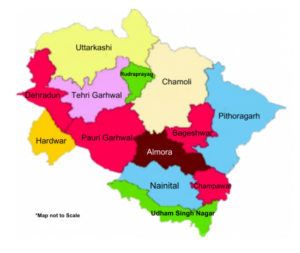
Uttarakhand has 13 districts, primarily divided between Kumaon and Garhwal. Kumaon has six districts and Garhwal has seven districts. According to the 2011 census, Uttarakhand’s total population is 10,086,349. Uttarakhand represents 0.83 percent of the country’s total population.
The official language of Uttarakhand is Sanskrit.
Uttarakhand is one of the states in India whose official language is Sanskrit. Hindi is the predominant language spoken in Uttarakhand, and Urdu is also spoken in some areas. Along with this, Kumaoni and Garhwali languages are also widely used.
Origin of the State
The name of the state of Uttarakhand is derived from the Sanskrit words uttar and khand, meaning north.
People’s Movements in Uttarakhand
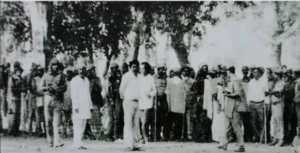
Uttarakhand is a state of India, created on November 9, 2000. Uttarakhand has witnessed numerous movements, most notably forest movements such as the Chipko Movement, which sought to stop the indiscriminate felling of trees. This movement was led by mountain women. Other movements, such as the Coolie Bekaar Movement and the Dola Palki Movement, have also been prominent.
Districts of Uttarakhand
Uttarakhand has 13 districts. Which are as follows:
Question 1. In which part of India is Uttarakhand located?
Answer: Uttarakhand is a mountainous state located in the northern part of India. Its geographical identity is associated with the Himalayas, rivers, valleys, forests, and religious sites.
Question 2. When was the state of Uttarakhand established?
Answer: Uttarakhand was established on November 9, 2000. It was separated from Uttar Pradesh and became the 27th state of India.
Question 3. From which state was Uttarakhand formed?
Answer: Uttarakhand was formed by separating the mountainous regions of Uttar Pradesh.
Question 4. What was the old name of Uttarakhand?
Answer: Uttaranchal
Question 5. What is the capital of Uttarakhand?
Answer: Dehradun is the winter capital of Uttarakhand, while Gairsain (Bharadiseain) has been declared the summer capital.
Question 6. Where is the High Court of Uttarakhand located?
Answer: The Uttarakhand High Court is located in Nainital.
Question 7. What is the state animal of Uttarakhand?
Answer: The state animal of Uttarakhand is the musk deer.
Question 8. What is the state bird of Uttarakhand?
Answer: The state bird of Uttarakhand is the Himalayan Monal.
Question 9. What is the state flower of Uttarakhand?
Answer: The state flower of Uttarakhand is the Brahma Kamal.
Question 10. What is the state tree of Uttarakhand?
Answer: The state tree of Uttarakhand is the Rhododendron.
Question 11. Uttarakhand shares international borders with which countries?
Answer: Uttarakhand shares international borders with China (Tibet region) and Nepal.
Question 12. How many divisions are there in Uttarakhand?
Answer: Uttarakhand has two divisions—Garhwal Division and Kumaon Division.
Question 13. How many districts are there in Uttarakhand?
Answer: Uttarakhand has a total of 13 districts.